
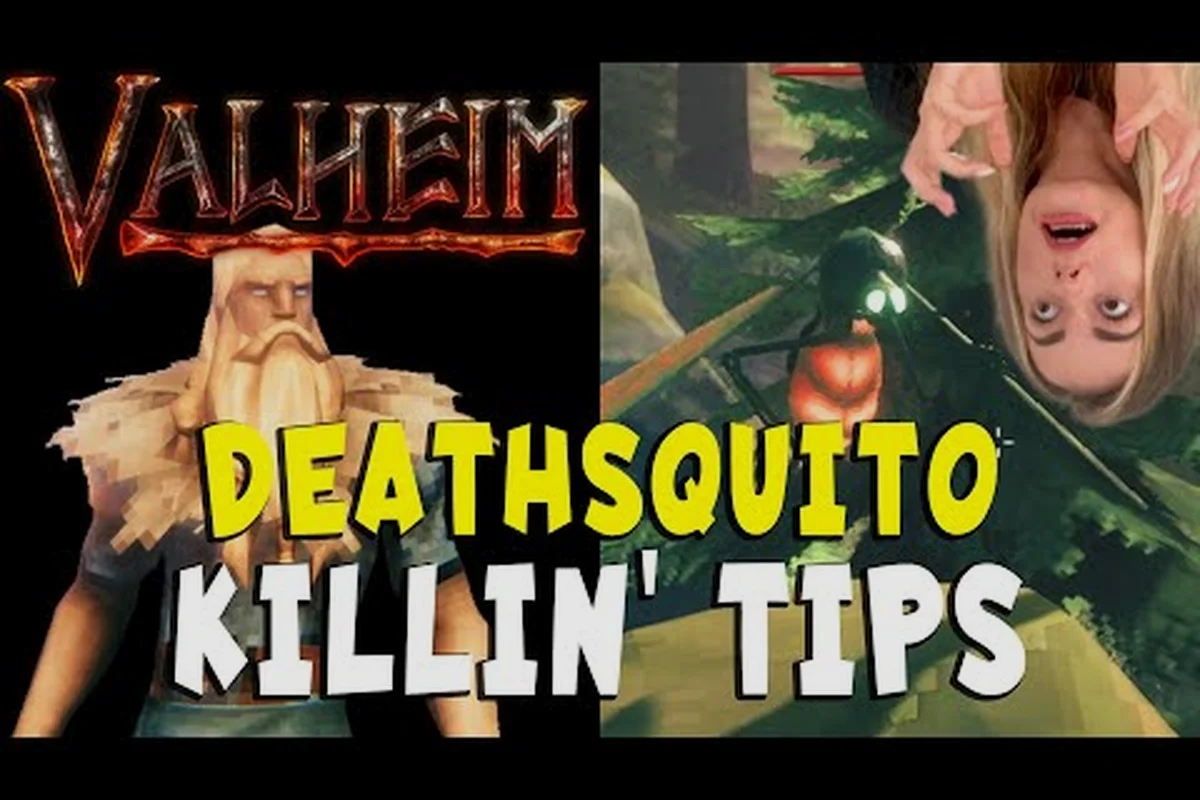
The Valheim deathsquito is the small, dive-bombing enemy that punishes undergeared Plains visitors before they can even spot a fuling village on the horizon, which is why learning its attack tells, parry timing, and pierce-resistance thresholds is the difference between hauling black metal home and losing a full kit to a fly-sized assassin. According to the official Steam page, Valheim drops players into a procedural Norse world of exploration, base-building, and boss-slaying, and the Plains biome is where the deathsquito gates almost every meaningful loot tier beyond the Valheim beginner guide progression path. This article covers the creature's stats, parry windows, armor breakpoints, and tactical patterns so you can clear the Plains without losing a body run to a single hit.
Deathsquito Stats, Spawn Conditions, and Why Plains Preparation Matters
The deathsquito is a small flying enemy found exclusively in the Plains biome, and its role in the Valheim ecosystem is to act as a hard gear check between Bronze Age progression and the Black Metal tier. It is one of three airborne threats in the late game alongside the valheim gjall (Mistlands) and the valheim seeker brood (Ashlands), but unlike those, the deathsquito appears as soon as you step into the tall grass of any Plains sector. The creature is tiny, fast, and emits a high-pitched audio cue that veteran players use as an early-warning radar.
Deathsquitos spawn during the day and night with equal frequency, and they are pulled into the same alert radius as the valheim fuling camps they often guard. A player who sprints into a fuling village will frequently pull 3-5 deathsquitos on top of a dozen fulings plus the occasional valheim fuling berserker, which is the most common cause of "I died before I saw the village" wipeouts reported by players. The deathsquito's small hitbox also makes it a nightmare to cleave with melee swings while surrounded by larger enemies, and it can chase boats for a long distance along Plains shorelines, so even coastal landings are not safe.
| Attribute | Value | Player Impact |
|---|---|---|
| Base HP | ~50 | Two solid melee hits from an iron-tier or better weapon |
| Base Damage | 90-100 Pierce | One-shots players below ~40 armor with no resistance |
| Move Speed | Very fast, flying | Outruns sprinting players on flat ground |
| Spawn Biome | Plains only | First appears after defeating Bonemass |
| Paralyzed by | None | Cannot be stunned by the valheim skeleton no-spawn trick |
| Aggression Range | ~40 meters | Will chase players across the Plains and onto adjacent shores |
The stat block above is the most-cited community reference because the deathsquito is small enough to clip through terrain, fast enough to disengage mid-fight, and tanky enough that you cannot ignore it while focusing on the valheim fuling melee swarm. The 90-100 pierce damage is the number most players learn the hard way, because until you stack a meaningful armor rating or pierce resistance, two hits will flatline a fully-rested Viking.
Why the Deathsquito Is the True Plains Gate
A common misconception is that the valheim fuling is the Plains' hardest enemy, but community testing consistently shows the deathsquito deletes more early-plains players than any other creature. Fulings telegraph their overhead swings, their shamans have a slow cast animation, and their camps are static; the deathsquito is mobile, appears anywhere in the biome, and its dive attack is a frame-perfect 1-shot under the right conditions. A single deathsquito hitting you while you are already mid-swing on a fuling is the textbook cause of the "cart full of black metal left at the body run" scenario.
This is also why the deathsquito is the first enemy most Plains rookies learn to parry. The attack animation is a wide, slow dive that opens with a 0.4-0.5 second wind-up, and the hitbox snaps to the player's position at the apex of the arc, so a well-timed shield bash stuns the creature on the ground for roughly 2 seconds, which is more than enough time to land a counter-strike. Players who skip this lesson typically do not progress to fighting Yagluth, the valheim dvergr towers, or any of the Mistlands content gated behind the Black Metal pickaxe.
Parry Timing, Shield Choices, and the Dive Attack Tell
Parrying the deathsquito is the single most efficient counter to its one-shot potential, and the reason is that a successful parry multiplies your next attack's damage by 2x while leaving the creature stunned and grounded. The Iron Buckler and Banded Shield are the two most-recommended options for Plains players because both have a 2.0x parry multiplier, a low block force, and a parry active window that visually matches the deathsquito's dive arc.
The parry active window in Valheim is roughly 0.25 seconds for bucklers and 0.3 seconds for medium shields, so the trick is to start your block the moment you hear the audio cue, then press the parry button when the deathsquito's nose crosses your shoulder line. Players who attempt to parry on the wind-up tend to eat the hit, because the collision box triggers slightly before the visual contact. Community testing on the public test branch suggests the parry window was tightened in the 1.0 build released in 2026, which means muscle memory from older patches may need a refresh.
| Shield | Parry Multiplier | Parry Window | Recommended vs Deathsquito? |
|---|---|---|---|
| Wood Shield | 1.5x | 0.2s | No — too small, fails often |
| Bronze Buckler | 1.5x | 0.2s | No — better for fulings |
| Iron Buckler | 2.0x | 0.25s | Yes — best early-Plains option |
| Banded Shield | 2.0x | 0.3s | Yes — best mid-Plains option |
| Black Metal Shield | 2.0x | 0.3s | Yes — overkill but reliable |
The table above is the shield progression most Plains-ready players follow, and it aligns with the official Steam store page's framing of Valheim as a game where gear upgrades meaningfully change how you interact with every biome. The Banded Shield is the gear most deathsquito kills fall to, because it is crafted at the forge with iron and chains, both of which you have already stockpiled by the time you sail to the Plains.
The 4-Frame Tell and Audio Cue Layering
The deathsquito's dive animation has a 4-frame "shoulder drop" tell, which is the visual cue that the parry window is about to open. The creature rises slightly above its current altitude, locks onto the player's head, and then drops its body weight forward; the moment its body line tilts past 30 degrees is when the parry input must land. Combine this visual tell with the audio cue — a sharp, descending whine — and you have two redundant input triggers that work in tandem for players who play with sound on.
Players who rely on audio-only typically parry 1-2 frames earlier than visual-only players, which is why the deathsquito parry is the canonical "play with headphones on" skill in the Valheim community. The audio cue is also useful for detecting a deathsquito that is still off-screen, because the sound radius is roughly 1.5x the aggro range, giving you a half-second head start on orienting your shield.
Root Armor, Pierce Resistance, and Gear Breakpoints for the Plains
If parry timing is the skill side of deathsquito survival, the gear side is stacking pierce resistance and reaching the root armor set, which is the dedicated anti-Plains equipment introduced for players who want a passive defense layer. Root armor is crafted from the Root material dropped by Ancient Roots in the Swamp biome, and it provides 2 base armor per piece plus a passive pierce resistance buff when the full set is worn. The full root set (helm, chest, legs) grants 6 total armor and a 25% pierce damage reduction, which is the threshold most players cross to stop being one-shot by the deathsquito's 90-100 damage hit.
| Armor Set | Base Armor | Pierce Resistance | Deathsquito One-Shot? |
|---|---|---|---|
| Troll Hide (full) | 15 | 0% | Yes, if combined with low health |
| Bronze (full) | 27 | 0% | Yes, common in Bonemass portal runs |
| Iron (full) | 60 | 0% | Borderline — high-health only |
| Root (full) | 6 base + 25% reduction | 25% | No — safest non-parry option |
| Padded (full) | 78 | 0% | No — high HP plus high armor |
| Fenris (full) | 26 | 0% | Yes — but adds movement speed for kiting |
The root armor set is the cheapest, lightest, and most pierce-resistant option available, which is why the Valheim deathsquito community treats it as the canonical first-Plains armor. The trade-off is that root armor has the lowest base armor rating of any late-game set, so you are trading raw mitigation for damage-type-specific protection. Players who run padded or fenris will still one-shot resist, but they are using more expensive materials than the root set requires.
How to Build the Root Set Before Your First Plains Run
Crafting root armor requires you to have already cleared the Swamp biome and fought Bonemass, because the recipes unlock at the forge once you defeat that boss. The full set needs 30 Root, 30 Bone Fragments, and 30 Leather Scraps, which is a manageable haul from a single Swamp clear if you chop every Ancient you find. The Ancient Roots are the spiky, vine-wrapped logs that grow around valheim dvergr ruins, and they are renewable in the Swamp by chopping nearby roots and replanting the saplings in cultivated ground.
Players who skip the Swamp and head straight to the Plains after the Mountain biome are the ones who post the "I got one-shot by a bug" screenshots, because their bronze or iron sets do not have the pierce resistance to absorb the deathsquito's hit. The safe progression order is Meadows → Black Forest → Swamp → Mountain → Plains, and the valheim skeleton no-spawn trick only works in crypts, so the deathsquito cannot be avoided by base placement alone.
According to the game's official Steam store page, Valheim is a brutal exploration and survival game set in a procedurally generated world inspired by Norse mythology, where players must craft, build, and fight to survive the dangers of the tenth Norse world.
Combat Tactics, Body Runs, and Multi-Creature Plains Engagements
The deathsquito is rarely fought in a vacuum, and the most common Plains engagement is a 3-way brawl between you, a fuling village, and 1-3 deathsquitos circling overhead. The correct response is to peel the deathsquito first, then kite the fulings into open ground, because fulings cannot path-find through tall grass as efficiently as you can. The deathsquito, by contrast, can fly over every terrain obstacle in the Plains, so the only reliable counter is to kill it before engaging the ground mobs.
| Situation | Recommended Tactic | Why It Works |
|---|---|---|
| Solo deathsquito (open Plains) | Parry → counter → finish | 2 parry combos kill any deathsquito |
| 1 deathsquito + 3 fulings | Stunlock deathsquito with bow, kite fulings | Ranged control prevents double-pressure |
| 2+ deathsquito + fuling camp | Retreat, use tree line, parry on descent | Trees block the deathsquito's dive angle |
| Deathsquito chasing boat | Hop off, parry on land | Deathsquito's dive arc is awkward over water |
| Deathsquito at night | Same as day, but bring rested bonus | Nights add no extra spawns, but visibility drops |
The "deathsquito chasing boat" scenario is a frequent cause of lost longships, because the creature's chase range is long enough to follow players along the shoreline for 200+ meters. The fix is to disembark on a small sandbar or beach where the deathsquito's dive arc resets, parry it, and then reboard once the aggro drops. This is the same kiting logic that applies to the valheim sea serpent, which is covered in detail in the creature hub.
Deathsquito vs Other Plains Enemies: Threat Ranking
Not every Plains enemy deserves the same level of caution, and the deathsquito is the highest priority kill in mixed spawns because it deals the most damage per second and ignores terrain. The table below ranks the Plains threats by one-shot potential against a fully-fed, rested Plains-geared player.
| Enemy | One-Shot HP Threshold | Aggro Range | Threat Rank |
|---|---|---|---|
| Deathsquito | ~80 HP lost per hit | 40m | 1 (highest) |
| Fuling Berserker | ~120 HP lost per jump attack | 20m | 2 |
| Fuling Shaman | 0 (no direct damage, but shield buff) | 30m | 3 (support) |
| Fuling (basic) | ~50 HP lost per swing | 20m | 4 |
| Lox | 0 (charges, but slow) | 15m | 5 (kitable) |
| Growth | 0 (spawns valheim gjall-style mob on death) | 5m | 6 (last hit priority) |
The threat ranking above is the order most Plains veterans target, and it is the same priority list recommended in the valheim-new-player-guide for the Plains entry section. Deathsquito first, shaman second, berserker third, and basic fulings last, because a single deathsquito hit landing during a fuling swing is enough to put a Plains rookie into the body-run state.
According to the official Valheim page on Steam, the Deathsquito is one of the hostile creatures found in the Plains biome and is widely regarded as one of the most dangerous enemies in the game.
Farming Deathsquitos for Chitin, Bug Meat, and Plains Economy
Once you are comfortable parrying deathsquitos, the next step is farming them for Chitin, which is the crafting material for the Carapace Buckler and the Chitin Club — both Mistlands prerequisites. The deathsquito drops 8-10 Chitin per kill plus a 50% chance of Bug Meat, which is a stew ingredient that matches the nutrition profile of Lox meat. A typical farm run involves clearing a 200x200 meter Plains sector and kiting the deathsquito spawns into a parry loop, which yields roughly 40-50 Chitin per 10-minute clear.
The Carapace Buckler is the upgrade path most parry-focused players pursue, because it is the only shield in the game that combines a 2.0x parry multiplier with a stamina bonus on perfect parry. The Chitin Club is a blunt-damage Mistlands-tier weapon that has a slow swing but a massive stagger, and it is also one of the rare materials required to summon the Mistlands boss. Farming deathsquitos is therefore a long-term investment in Mistlands progression, not just a Plains survival task.
| Drop | Quantity Per Kill | Use Case |
|---|---|---|
| Chitin | 8-10 | Carapace Buckler, Chitin Club, Mistlands gear |
| Bug Meat | 50% chance, 1-2 | Bug Meat Stew (best Plains-tier food) |
| Deathsquito Wing | Decorative | Trophy / aesthetic piece |
| Trophy (rare) | ~5% chance | Hang on item stand for biome mastery bonus |
The trophy drop is a long-term chase for completionist players, because the Plains mastery bonus requires mounting a trophy from every Plains creature, and the deathsquito trophy is the rarest of the bunch. The mastery bonus is +15% parry damage for the rest of the world, which compounds with the Carapace Buckler's perfect-parry stamina regen and the Banded Shield's 2.0x multiplier into a parry-focused build that can one-cycle Mistlands enemies.
Frequently Asked Questions
Can the Valheim deathsquito be one-shot by an arrow?
Yes, a single Needle arrow from a fully-upgraded Huntsman Bow will kill a deathsquito in one hit to the head, and this is the safest counter for players who do not want to learn parry timing. The downside is that arrows are expensive to mass-produce, so most players reserve the headshot trick for emergencies and rely on parries for sustained farming.
Does root armor completely negate the deathsquito's one-shot?
Root armor reduces the deathsquito's damage by 25%, which brings a 100-damage hit down to 75, so it removes the one-shot against any player above ~85 HP. It is not a complete immunity, but it is the cheapest and lightest set that flips the deathsquito from a guaranteed killer into a survivable hit, which is why the Plains community treats root as the canonical first-Plains armor.
Do deathsquitos spawn in the Mistlands?
No, deathsquitos are a Plains-exclusive creature and are replaced in the Mistlands by the valheim gjall and its tick spawns. If you are seeing deathsquito-like hits in the Mistlands, you are actually being targeted by a gjall's projectile or a seeker brood's acid spit, both of which have a different audio cue and a longer wind-up than the deathsquito's dive.
Can I use a tower base to avoid deathsquito deathsquito spawns?
No, the deathsquito flies over walls and ignores cover, which is why Plains towers are less safe than Swamp towers. The reliable counter is to build inside a valheim dvergr tower, because the dvergr's architecture blocks flight paths and the valheim skeleton spawns inside the tower are not affected by your presence the same way fulings are.