
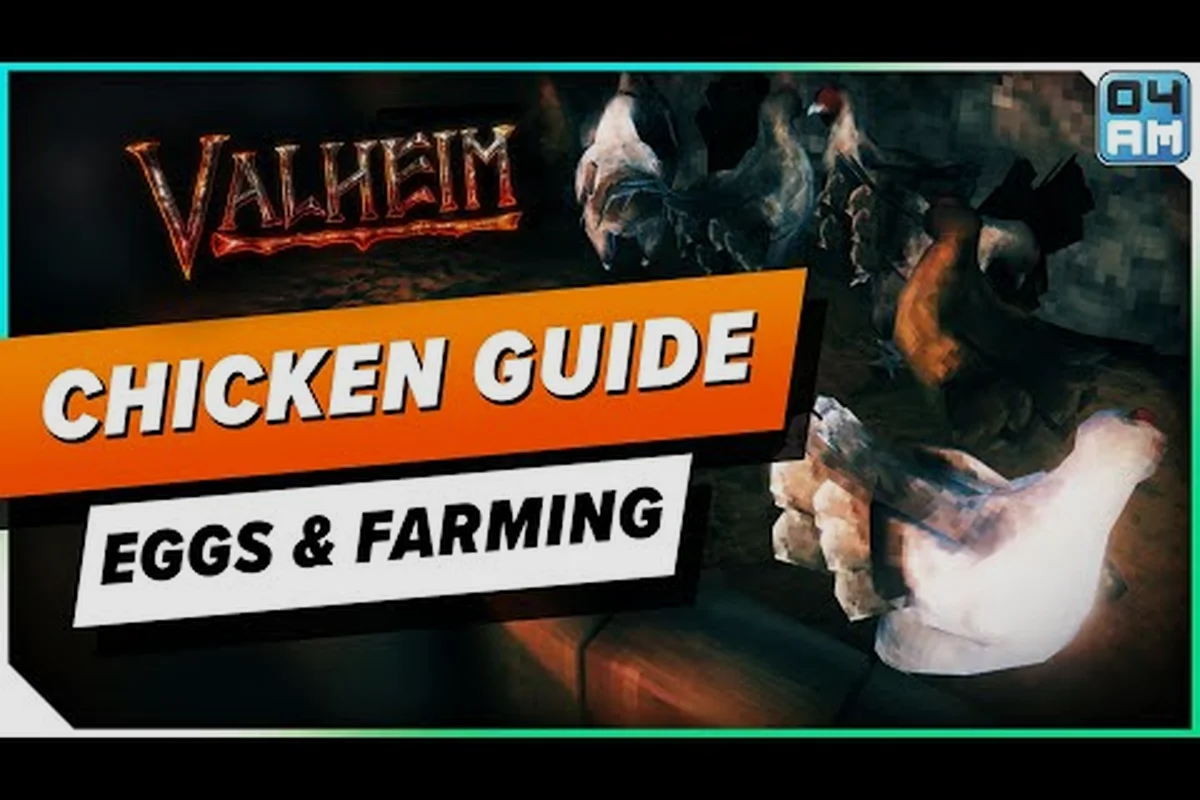
Finding Your First Valheim Chicken Eggs in the Wild
Before you can build a coop, you need at least one egg in your inventory, and Valheim scatters them across two specific biomes inside abandoned farm structures. According to community data, these ruined outbuildings only spawn in the Meadows and Plains, which means a quick Meadows scout will almost always reward you with a starter egg before you even think about pushing into late-game content. Walk the edges of meadows near Black Forest borders, listen for the ambient creak of broken fences, and look for half-collapsed thatch roofing — that silhouette marks an abandoned farm almost every time.
When you enter one of these ruins, three things usually catch your eye: a tipped cart, a broken table, and a small straw nest tucked into a corner. That nest holds between one and three chicken eggs at world generation, and they respawn whenever the structure re-rolls on a fresh playthrough. Pick the egg up with the same E key you would use on berries, slot it into your inventory, and you are ready for the next step. Eggs stack to ten per slot, so even a single ruined farm is enough to bootstrap an entire flock.
| Abandoned Farm Spawn Location | Egg Yield | Biome Difficulty | Notes |
|---|---|---|---|
| Meadows (near Black Forest border) | 1–3 eggs | Trivial | Easiest early-game source |
| Meadows (deep interior) | 1–3 eggs | Trivial | Often overlaps with Greyling patrols |
| Plains (near Fuling villages) | 1–3 eggs | High | Brings Deathsquito risk |
| Plains (isolated) | 1–3 eggs | High | Closer to Lox herds |
If you want more context on locating that second-tier biome where Plains farms sometimes appear, the Valheim plains guide walks through the ocean voyage that puts you in range. The key point for the egg loop, however, is that the Meadows alone are usually enough to launch the system. You do not need to sail anywhere until you are deliberately expanding production.
Hatching Eggs and Validating Valheim Tamed Animal Care Basics
Eggs do nothing on their own. You must drop one on the ground in an enclosed space with a roof, a workbench nearby for the "Comfort" tick, and a campfire or hearth for warmth. After roughly 20 in-game minutes of sitting near a fire, the egg will pop into a chick that immediately begins to wander around looking for grain. That brief wait is your first real test of valheim tamed animal care, because the chick will die if it falls into water, gets stomped by a troll, or wanders too far from the building footprint during the imprint phase.
Players often lose their first chick to a curious Greydwarf or to a building that was not actually enclosed — the game uses a footprint check that requires a floor, walls, and a roof, similar to the same check used for the Rested buff in the Valheim how to get barley flour prep workflow. The simplest, most reliable pen is a 2×2 wood floor square, four wood walls, and a thatch roof with the campfire at center. Drop the egg, watch it hatch, and let the chick run free inside that box for a few minutes.
Once a chick matures into an adult chicken, it will lay its own eggs roughly every 20 to 30 in-game minutes, so a healthy starter flock of three adults will outproduce the random spawn rate of ruined farms by a wide margin. The chickens do not need feeding in the strict survival sense, but they will die if the area is destroyed, so build the pen somewhere that survives raids. A stone core for the floor and a wood frame for the walls gives you the best mix of cheap materials and structural integrity, because stone is the only tier that shrugs off a troll slam. This is also where valheim creature drops begin to feel less like a gamble and more like a controlled pipeline, since the chickens become your personal source of eggs and feathers instead of something you have to scout for.
Building a Valheim Chicken Coop That Actually Survives
A real chicken coop in Valheim is a building, not just a box, and treating it as a real base means you also get the bonus of high Comfort for your own Rested buff. The minimum viable pen is a 3×3 wood room with a thatch roof, a single door, and a workbench placed in a corner. The comfort source that comes from chickens counts toward the same score as banners, rugs, and chairs, so a coop with six adults, a brazier, and a couple of rugs will quietly push you toward a high Comfort tier without any extra effort.
The pen walls should reach at least two stories tall if you want to keep chicks safe from Fulings or Goblin Shaman ranged attacks during a Plains raid, and the door needs to face inward so a raider cannot flip it open from outside. Players report that enclosing the pen with a wooden fence and adding a stone foundation under the doorframe is the most common pattern that survives a Greydwarf event without losses. If you want to keep the eggs flowing while also being elsewhere on the map, you can place a portal next to the coop so the eggs teleport to a central storage room, and that is exactly the same kind of logistics trick that keeps your food economy alive in the Valheim how to get barley flour pipeline.
Feeding, Upkeep, and Valheim Animal Food Strategy
Chickens eat off the ground by sniffing berry bushes, turnip seeds, carrot seeds, and dropped mushrooms, but they will not starve if those resources are absent. That detail is important for new players who worry about over-stocking, because the chickens are far more resilient than wolves or boars, which require constant hay and foraging. What they cannot survive is the destruction of their pen, a fire inside their footprint, or a raid in which the adults get pushed out of the safe zone. The Valheim wiki and player reports both confirm that the valheim animal food loop is closer to a "buffet than a ration" — the chickens eat opportunistically whenever food is around and otherwise just walk around looking for grain.
| Food Source | Where It Grows | Replantable? | Best For |
|---|---|---|---|
| Berry bushes | Meadows, Black Forest edges | No (regrows over time) | Steady snack |
| Turnip seeds | Plains farms (from Valheim how to get barley flour prep) | Yes | Bulk feed |
| Carrot seeds | Black Forest | Yes | Variety in winter |
| Mushroom | Swamp, Black Forest | No (loot drop) | Backup feed |
| Grain (chicken only) | Found in abandoned farms | No | Direct consumption |
The real reason to plant turnip and carrot seeds near the coop is not just feed, but room comfort — a coop with greenery around the footprint scores additional comfort points, and that compounds with the Rested bonus you already get from the chickens themselves. Players running a Plains base will often drop a turnip farm in the same meadow patch that already contains a ruin, which then doubles as both food and decoration for the coop. This is also the stage where many players realize the valheim creature drops category is broader than they thought, because chickens produce feathers alongside eggs, and feathers are needed for high-tier arrows once you are past Bronze Age.
According to the official Valheim store page on Steam, chickens can be obtained by hatching chicken eggs, which you can find scattered around the Meadows biome, particularly near abandoned buildings, by building a nest, or by encountering and defeating the occasional wild hen.
Defending the Coop From Valheim Raid Events and Shaking Ground
Raids are the single biggest threat to a Valheim chicken coop, and the warning you learn to dread is "valheim the ground is shaking." That line of text means a troll or a higher-tier raider is inbound, and the screen will physically shake for a moment before the boss-class event spawns near your base. According to community testing, raid probability scales with the number of players near a base, the number of workbenches in range, and the number of "comfortable" structures like beds, chairs, and yes, chicken coops. The trade-off is brutal: a coop gives you Comfort but invites raids, and a coop built too close to a Plains border invites Fulings that will not hesitate to slap your chickens into paste.
| Raid Event | Trigger Biome | Chicken Coop Risk | Defense Tip |
|---|---|---|---|
| Greyling / Greydwarf | Meadows, Black Forest | Low | Wood walls are enough |
| Troll | Black Forest | High | Stone core + earth wall |
| Fuling | Plains | Very High | Earthen ramparts + ditch |
| Deathsquito swarm | Plains | Medium | Roofed pen + portal escape |
| Goblin Shaman | Plains | High | 2-story pen with stone floor |
A few defensive habits are non-negotiable once you start treating chickens as a real economy. First, never put a coop on the open Plains without a ditch and earthen rampart; the Fulings will path right through the wall otherwise. Second, never skip a roof. A roof is what blocks valheim raid events from being able to hit your chickens from above with a thrown rock or a shamans lightning strike, both of which will one-shot a chick and seriously wound an adult. Third, keep a portal inside the coop so you can run away with the eggs in your pocket if the raid turns sour. The portal trick is the same escape valve used by anyone pushing into Mistlands or Ashlands, and a coop with a portal becomes a kind of fortified bunker for your valheim creature drops.
One nuance worth noting is the actual trigger for the ground-shaking line. According to community data, the warning fires when a forest troll or a Hatchling from the Mistlands decides to stomp near a base, and the shake animation is a client-side cue that is also used for certain boss mechanics. A troll does not need to be actively raiding your coop to make the ground shake — it just needs to spawn or aggro within a few hundred meters of your base — so even a coop in the Meadows can feel the rumble if a Black Forest troll wanders too close. A stone floor underneath the chickens and a ditch at the perimeter are usually enough to make that threat cosmetic instead of fatal.
Keeping Eggs Flowing Through Tough Seasons
Winter does not kill chickens, but Freezing status will silently cut their egg-laying rate if they are caught outside in the cold for too long. A roofed coop with a hearth solves this entirely, because the warmth radius from a campfire or a hearth counts as the same temperature buff that protects you in the Mountains. Players running a coop near a Plains base often add a second hearth to push the temperature tier high enough that Lox-cape-wearing Vikings can stand in the same pen during a cold snap. This is also the spot where valheim animal food becomes less about hunger and more about comfort thresholds, since the chickens do not need a constant food supply but they do need a stable environment to lay on schedule.
If you want to maximize egg production without micromanaging, the most efficient pattern is six adult chickens, two roosts (added with later updates as decoration that boosts Comfort), a campfire, a workbench, and a sign that reminds you not to open the door during a raid. A setup like that produces roughly one egg every 20 minutes per adult, so a full six-chicken flock will push out close to 30 eggs in a single in-game day. That volume is more than enough to keep a Queens Jam pipeline, a Feather Arrow pipeline, and a backup food pipeline running without any further investment, and it is the kind of long-term economy that makes a Plains base feel sustainable instead of desperate.
Valheim How to Get Chicken Eggs: Common Mistakes and Pro Tips
A handful of mistakes show up again and again in community reports, and most of them are easy to avoid once you know the pattern. The most common one is dropping an egg outside on grass and waiting for it to hatch. The egg will never hatch without an enclosed footprint and a heat source, and it will despawn if left on the ground too long in some configurations. Another common mistake is building a coop with a wooden floor in the Plains, because a Greydwarf or Fuling Brute can punch through wood in two hits and reach the chickens in seconds. A stone core at ground level with wood walls on top gives you the best of both worlds: cheap materials, raid-proof chickens.
| Common Mistake | What Happens | Fix |
|---|---|---|
| Dropping egg on open ground | Egg does not hatch | Drop inside enclosed pen with fire |
| No roof on coop | Chick wanders, dies | Add thatch or wood roof |
| Wood floor in Plains | Brute smashes through | Use stone core under wood frame |
| Coop near Fuling village | Constant raids | Move to isolated Meadows patch |
| No portal in coop | Eggs lost during raid | Place portal inside footprint |
| Coop next to Mountains | Cold kills adults | Add hearth + roof |
A second tier of pro tips comes from the r/Valheim community and from the long-term testing that players have logged on the wiki. The first is that chickens do not despawn when you are far from the coop as long as the building footprint is loaded, which means you can leave a coop alone for hours and return to find the egg count much higher. The second is that you can pick up a chicken with E and drop it in a new pen if you ever need to relocate, which makes base redesigns painless. The third is that valheim creature drops include feathers, raw meat, and eggs in that order of importance for crafting, so always keep at least one chest dedicated to egg overflow if you are not actively cooking Queens Jam.
A practical pro tip for anyone juggling the egg economy alongside the rest of the Plains push is to align the coop build with your existing base. The pen works best as an annex to a smelting hall, a portal hub, or a fermenter room because those buildings already provide the workbench coverage, the comfort sources, and the structural integrity you need. This is the same kind of base-design philosophy that powers a comfortable Mountain base, and it is why a coop with a fermenter next door, a brazier above, and a portal behind the door will quietly outperform a coop that sits in a random field. The egg loop rewards integration, not isolation.
Finally, a quick note on the connection between chickens and the rest of the valheim creature drops system. Chickens are the only tamed animal that produces a renewable, stackable crafting material that does not require a Forest biome reset. Boars drop leather scraps and tusks but only when killed, wolves drop trophies but only after taming and feeding, and Lox drop trophies but only in groups. Chickens, by contrast, are a renewable farm that scales with Comfort and footprint, which makes them the best long-term valheim animal food investment for any player who wants a stable Queens Jam pipeline or a steady arrow supply. Treat them as a system, not a side activity, and the egg economy will fund your entire late-game push.
Frequently Asked Questions
Where exactly do chicken eggs spawn in Valheim?
Chicken eggs only spawn in abandoned farm structures, which are procedural ruins found in the Meadows and occasionally in the Plains. Each farm holds one to three eggs in a small straw nest, and the eggs respawn whenever the world generates, so a single ruined farm is enough to bootstrap your entire flock. According to community data, the best odds are in the Meadows near Black Forest borders because the Plains versions are usually guarded by Fulings or Deathsquitos.
Do chickens need food and care like boars or wolves?
Chickens are the lowest-maintenance tamed animal in Valheim because they do not need a hay supply, a taming pen, or a feeding trough. They will opportunistically eat dropped berries, turnip seeds, carrot seeds, and mushrooms, but they will not starve to death if those resources run out. What they do need is an enclosed pen with a roof, a campfire or hearth for warmth, and protection from raid events, which is the core of the valheim tamed animal care loop.
Can raid events kill my chickens, and what does "the ground is shaking" mean?
Yes, raid events can absolutely kill your chickens if the pen is not defended properly. The "valheim the ground is shaking" line of text is a client-side warning that fires when a forest troll, a Mistlands Hatchling, or a boss-class enemy spawns or aggroes near your base, and the screen shake is a built-in cue to get inside. To keep chickens safe, build a coop with a stone core floor, a wood frame, a full roof, and a perimeter ditch if you are in the Plains, and place a portal inside the footprint so you can evacuate with the eggs if a raid turns sour.
Do I need a roost for chickens to lay eggs?
You do not need a roost for chickens to lay eggs, because egg production is tied to Comfort, footprint, and the enclosed-space check, not to any specific furniture. That said, a roost is a Comfort decoration that adds a few bonus points to your overall Rested tier, so adding one inside the coop is a small win for your own buffs. Players running optimized bases often add two roosts per coop just to push the Comfort score one tier higher, which is the same kind of stacking logic that powers the Valheim plains guide Comfort builds.
Can I use chickens for anything besides Queens Jam and arrows?
Yes, chickens are one of the most versatile renewable resources in the game. They drop eggs for Queens Jam, raw meat for cooking, and feathers for arrows, and each of those drops feeds into a different crafting pipeline that you will need at some point in the late game. According to community testing, a healthy six-chicken coop produces enough material to keep both a Queens Jam kitchen and a feather-arrow bench running without any further farming, which makes chickens the single best long-term valheim creature drops investment for any player who wants a self-sustaining late-game base.