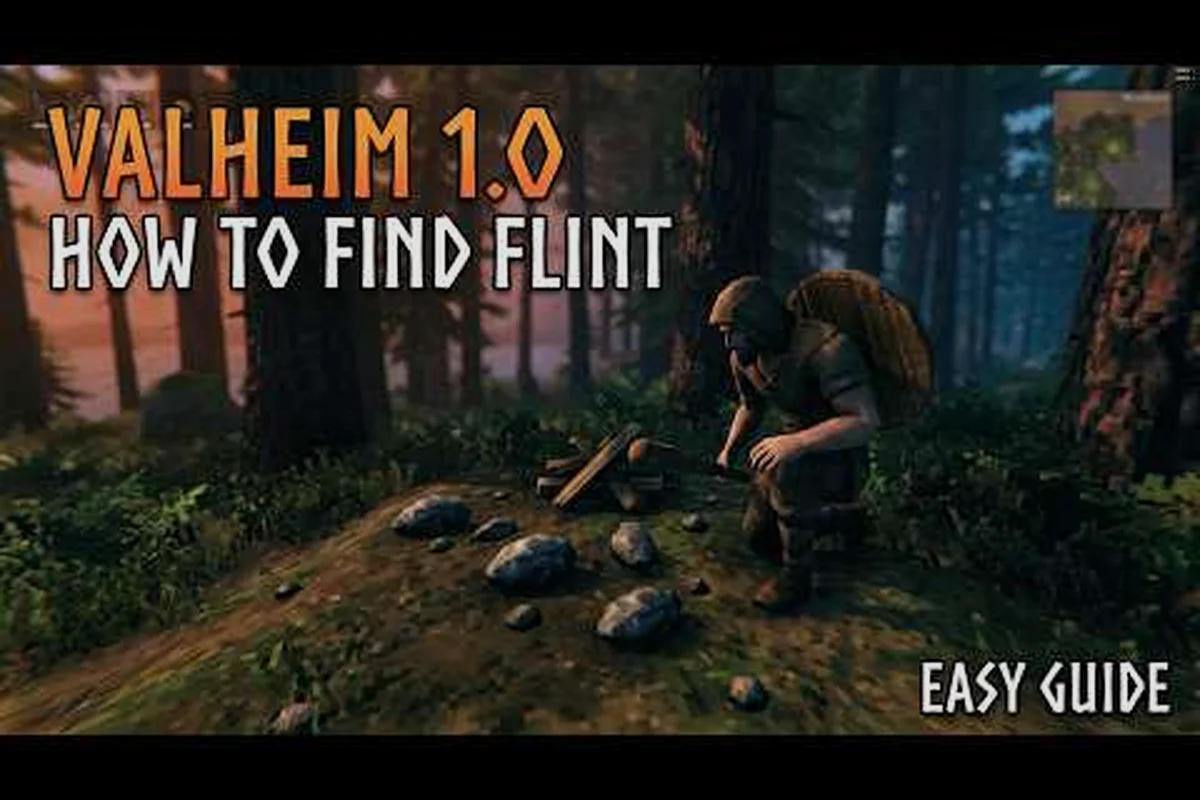
Flint is the first real resource payoff in Valheim because it unlocks the Flint Axe, the Flint Spear, and early arrows, all of which replace your weak starter club the moment you spawn. Knowing exactly how to get flint in Valheim, where the pale stones spawn, and which tools to craft first will save you hours of wandering the Meadows shoreline after day one.
Where Flint Spawns in the Meadows Biome
Flint nodes always appear on or near shorelines, so the fastest way to start a fresh run is to walk from your spawn stone directly toward the nearest ocean. According to the official Valheim store page, pale rocks show up on beaches and at the water's edge, and they are visible from a distance because their chalky grey color stands out against the dark sand. You can also find small flint deposits in shallow water along river mouths where the Meadows meet the Black Forest, which is a useful secondary path when no large beach is close to your spawn.
The spawn frequency scales with biome type. Meadows shorelines have the densest distribution in the early game, while Black Forest lakeshores produce small but reliable amounts. The community wiki confirms that flint never spawns in the Black Forest interior, the Swamp, the Mountains, the Plains, the Mistlands, or the new Deep North biome that arrived with the 1.0 release. If you have walked inland and cannot find any pale rocks, you have gone too far; backtrack toward water.
Reading the Beach for Flint Nodes
Flint is one of the easiest resources to identify because it sits on top of the terrain in a small, angular rock cluster rather than embedding itself into a boulder like copper or tin. Each node holds between 3 and 6 pieces before it breaks, and you only need your bare hands or any basic pickaxe to harvest it. A Wooden Club, a Stone Axe, or even a torch will all work because flint has zero durability requirement and no tool tier gate.
| Flint Spawn Location | Typical Yield per Node | Difficulty to Reach | Notes |
|---|---|---|---|
| Meadows ocean beach | 3-6 flint | Easy | Brightest nodes, easiest to spot from a sprint |
| Meadows river mouth | 2-4 flint | Easy | Often mixed with greylings and boar paths |
| Black Forest lakeshore | 2-3 flint | Medium | Watch for greydwarves; bring a shield |
| Shallow ocean water | 1-2 flint | Easy | Wades require stamina management |
Because flint is so light, you can carry a full stack of 50 pieces without it slowing you down, which means a single beach sweep usually covers every recipe you need through the bronze age.
Flint Tools and Weapons: Crafting Priority
The reason most guides start with flint in Valheim is that the Flint Axe is the very first tool that can chop down Beech, Oak, and Birch trees for fine wood. Without it, you are stuck chopping the smaller Beech Saplings with your starter Stone Axe, which yields almost no fine wood. The Flint Axe is unlocked at Workbench level 1 and costs 6 wood, 4 flint, and 2 leather scraps, so gathering flint alone is not enough; you also need to start hide farming the moment you find a boar.
| Crafted Item | Workbench Level | Cost | Primary Use |
|---|---|---|---|
| Flint Axe | 1 | 6 wood, 4 flint, 2 leather scraps | Chops fine wood trees, faster than club |
| Flint Spear | 1 | 10 wood, 4 flint, 2 leather scraps | First reach weapon, great for kiting greylings |
| Flint Arrow (10) | 1 | 8 wood, 4 flint, 2 feathers | Ranged option for hunting and early Eikthyr |
| Flint Headed Arrow (10) | 2 | 6 flint, 5 wood, 4 feathers | Higher damage, used in tier 2 hunting bow |
| Crude Torch | 1 | 1 wood, 1 resin | Useful for night, not flint-dependent |
After unlocking Chopping Block (4 wood, 6 flint) and Wooden Pole workbench upgrades, flint remains relevant for arrow production even after you have bronze tools. The arrows stop scaling only when you unlock iron heads, which makes early flint reserves worth stacking.
The Leather Scraps Bottleneck
Every flint tool needs leather scraps, so the moment you have 6 flint in your inventory, you should switch your focus to hide farming. Leather scraps drop from boars at a roughly 70% rate, so killing 2-3 boars usually covers both the Flint Axe and Flint Spear. The fastest hide farming route is to build a small wood pen near a boar herd, lure one or two adults inside with raspberries or mushrooms, and kite them with your starter club until they aggro only on you.
For a detailed break-down of how to set up a boar farm and keep leather scraps flowing, the Valheim resource respawn and farming guide explains the rotation between boars, deer, and birds so that your hide income stays consistent through the bronze age. Many players underestimate that Leather Scraps are a tier 0-2 bottleneck, and that stockpile pressure only relaxes once you reach the Swamp and unlock Bog Iron recipes.
Valheim How to Get Leather Scraps and Hide Farming Routes
Leather scraps are the connective tissue between flint and almost every early game upgrade, which is why valheim hide farming and valheim how to get leather scraps are practically the same question. There are three reliable sources in the Meadows and Black Forest, and they each scale differently with the time you invest.
| Source | Leather Scraps per Kill | Risk | Best For |
|---|---|---|---|
| Boar | 1-2 | Low if kited | Steady income, pen-friendly |
| Deer | 1 | Low | Quick runs, ranged bow |
| Greyling (Shaman) | 0-1 | Medium | Backup when boars are scarce |
| Bird (Hunting) | 0 (drops feathers) | None | Supports arrow craft, not leather |
According to the official Valheim page on Steam, flint is one of the early-game resources players need to gather to begin crafting basic tools and weapons.
Boar Pen Strategy
Building a boar pen is the most efficient valheim hide farming method because it lets you convert hostile adults into a renewable herd. When you kill an adult boar, a baby boar sometimes spawns; if you keep the baby alive in a fenced area and feed it mushrooms, carrots, turnips, or berries, it grows into a tamed adult that you can harvest for leather scraps on a controlled schedule. Players report that a 3x3 wood pen next to a Beach biome edge supports a herd of 4-6 tamed adults, which generates roughly 6-10 leather scraps per harvest cycle.
Deer and Greyling Backup Routes
If you spawn far from a boar herd, deer are a faster leather source because they are skittish and you can one-shot them with a Hunting Bow at close range. The arrows you craft from flint make this loop work, so you should always make 20-30 Flint Arrows before leaving the spawn area. Greylings, the small grey goblins that ambush you at night, drop scraps occasionally and are best used as filler when boars and deer populations are depleted. Once the Eikthyr power reduces stamina cost, you can sprint across the entire Meadows for a full leather sweep in under 10 minutes.
Valheim How to Get Chains, Tar, Crystal, and Eitr
After the bronze and iron ages, your flint loops evolve into a much more complex resource web that includes chains, tar, crystal, and eventually eitr. While these materials look unrelated at first glance, they all share a progression gate: they appear in new biomes and unlock crafting tiers that retroactively improve how you use your early flint and leather scraps. Knowing what they do and where they spawn lets you plan your next 3-5 sailing trips in advance.
| Late Resource | Biome | Source | Used For |
|---|---|---|---|
| Chain | Sunken Crypt (Swamp) | Muddy Scrap Piles, Wraith drops | Artisan Table, iron reinforcements |
| Tar | Tar Pit (Plains) | Bubbling black pools, pump with barrels | Tarred Wood, friction-reducing recipes |
| Crystal | Mountains | Glowing crystal nodes, Drakes | Spinning Wheel, Frost Caster |
| Eitr | Mistlands / Deep North (1.0) | Sap extractor, Dvergr structures | Mage weapons, Staff of Embers |
Valheim How to Get Chains
Chains are a Swamp biome material that drops from Muddy Scrap Piles found inside Sunken Crypts. You will need a Swamp Key (dropped by The Elder) to enter these dungeons, and a Wishbone (dropped by Bonemass) is highly recommended because the crypts are labyrinthine. Each pile yields 1-2 chains, and you need 20 chains to unlock the Artisan Table, which is the crafting station for advanced processing.
Valheim How to Get Tar
Tar is harvested in the Plains from naturally forming Tar Pits using Tar Extractors fed with Resin and Bone Fragments. The extractor needs to be placed directly on or beside the pit, and it slowly produces one tar at a time. Tar is the binding agent for Tarred Wood, which is required to build Longship masts and reinforced structures that resist Plains creature damage. A single Plains trip with 5-6 extractors placed near a tar pool yields 5-8 tar per in-game day, so a small tar farm is essential before you sail into Mistlands territory.
Valheim How to Get Crystal
Crystal only spawns in the Mountains biome, where glowing pale-blue nodes protrude from snowbanks. The crystal is harvested with a Pickaxe, not bare hands, and each node yields 2-4 crystal shards. You will need crystal to build the Spinning Wheel and the Frost Caster, both of which are prerequisites for the Mistlands progression. The Mountains are dangerous because of Drakes, Stone Golems, and freezing temperatures, so you should bring Wolf Fur Armor, Lox Meat Pie, and a Frost Resistance Mead before attempting a crystal sweep.
Valheim How to Get Eitr
Eitr is the most recent tier of magical resource, introduced with the Mistlands biome and expanded in the 1.0 update with the Deep North biome. It is harvested by building a Sap Extractor near a Yggdrasil Shrub or a Dvergr structure, and it requires a steady supply of Sap and Royal Jelly to operate. Eitr is the fuel for the Staff of Embers, Staff of Frost, and Krom weapons, so most players do not chase eitr until they have already built a comfortable Plains and Mistlands base. Iron and metal foundations remain essential; if you need to revisit your metal gathering priorities, the Valheim how to get iron guide walks through the full progression from mud to flametal.
Tool Progression Roadmap and Common Pitfalls
Planning your tool progression around flint prevents the most common early-game mistake, which is crafting the Flint Knife instead of the Flint Axe. The Flint Knife is a fun toy, but it does not advance your resource flow, while the Flint Axe and Flint Spear directly unlock fine wood and the ability to kite greylings. After the flint tier, your next milestones are the Chopping Block, Wooden Pole (4-6 flint each), and the Bronze Age pickaxe.
| Tier | Tool to Unlock | Key Resource | Why It Matters |
|---|---|---|---|
| Stone Age | Stone Axe, Club | Wood, stone | Starter equipment only |
| Flint Age | Flint Axe, Flint Spear, Flint Arrow | Flint, leather scraps | Unlocks fine wood, ranged kiting |
| Bronze Age | Bronze Axe, Bronze Pickaxe | Copper, tin, bronze | First metal tier, no more wood-only tools |
| Iron Age | Iron Pickaxe, Iron Axe | Mud, scrap iron | Required for Silver and Frost Caster |
| Mistlands | Blackmetal Tools, Flametal | Black metal, flametal | Endgame crafting, mage weapons |
Common Pitfalls in the First 5 Days
Players often burn through their flint reserves by crafting Flint Knives and Crude Bows instead of stockpiling arrows. Flint is plentiful, but the leather scraps required for every tool recipe are limited, so it is better to invest your early leather into one or two high-impact pieces. Another frequent mistake is forgetting that Flint Arrows require feathers, and feathers come from hunting birds in the Meadows. A quick bow pass over any coastal area usually yields 10-20 feathers, which is enough for 30-50 arrows, which is enough to kill Eikthyr with minimal risk.
A third pitfall is overlooking the Chopping Block upgrade, which costs 6 flint and 4 wood. The Chopping Block lets you split firewood for the first time, which unlocks the Forge and the Charred Wood recipe that is essential for early smelting. Without it, you are stuck with raw wood fuel, which burns inefficiently and forces constant refilling. If you want to streamline how materials and metal ingots move between your bases, the Valheim teleporting metals and farming guide explains which items are restricted, which can be ported freely, and how to plan your crops and farm layouts around portal logistics.
Frequently Asked Questions
What is the fastest way to get flint in Valheim?
Sprint directly to the nearest Meadows shoreline from your spawn stone. Flint nodes are visible as pale grey clusters on the beach and shallow water, and they respawn every 20 minutes of in-game time. A single loop around a small island or peninsula usually yields 20-40 flint, which is enough for every tool and arrow recipe through the bronze age.
Do I need a pickaxe to mine flint?
No. Flint is one of the few resources in Valheim that you can harvest with bare hands, and the game explicitly allows you to break nodes without any tool tier. A Stone Axe, Wooden Club, or even a torch works equally well, and flint has no durability requirement, which makes it the safest first resource for brand new players.
How many leather scraps do I need for the full flint toolset?
You need at least 6 leather scraps to craft the Flint Axe, Flint Spear, and a stack of Flint Arrows. A full end-of-bronze age reservation of 20-30 scraps is recommended because you will reuse leather for Bronze Armor, Bronze Buckler, and a backup Flint Knife for fine wood harvesting. Boar pens usually sustain that level without farming pressure.
Can flint spawn anywhere outside the Meadows biome?
Flint only spawns on or near shorelines, which limits it to the Meadows and Black Forest lake edges. It does not appear in the Swamp, Mountains, Plains, Mistlands, or Deep North, so once you leave the starter biomes you must stockpile flint beforehand. The same pale-rock model is used in all biomes, but the spawn table is restricted to two biomes only.
How does flint connect to endgame resources like chains, tar, crystal, and eitr?
Flint is the first material in the early-game resource chain that teaches you to gather, then craft, then progress into a new biome. Once you have flint and leather scraps sorted, the same loop repeats with chains in the Swamp, tar in the Plains, crystal in the Mountains, and eitr in the Mistlands or Deep North. Understanding the flint loop from day one is what makes the rest of the game's resource tiers feel natural rather than overwhelming.